Mission
Gordon State College (GSC) is a public institution in Barnesville, Georgia, operating under the University System of Georgia. Founded in 1852, the college enrolls approximately 3,300 students as of Fall 2025 and provides undergraduate degrees across a range of disciplines designed to meet Georgia’s workforce development needs—particularly in nursing, education, and business. GSC is organized around multiple schools that deliver regionally relevant academic programs and emphasize student success and support. The college maintains an accessible admissions policy, fostering opportunity and upward mobility for students from across the state and region.
Fall 2025 Student Profile Overview
Gordon State College enrolls approximately 3,300 undergraduate students, the majority of whom are Georgia residents. More than half of GSC students are enrolled exclusively in online courses, reflecting the college’s commitment to accessible and flexible learning opportunities. The student body is diverse, with a strong representation of African American and White students, along with smaller percentages of Hispanic, Asian, and multiracial students. Female students make up about two-thirds of the population, and the college serves a blend of traditional and nontraditional learners, including working adults and part-time students. In Fall 2025, approximately 20% of GSC’s students were dual enrollment participants from area high schools, underscoring the institution’s role in preparing students for college and career pathways across Georgia.
Please see additional student profile data provided below:
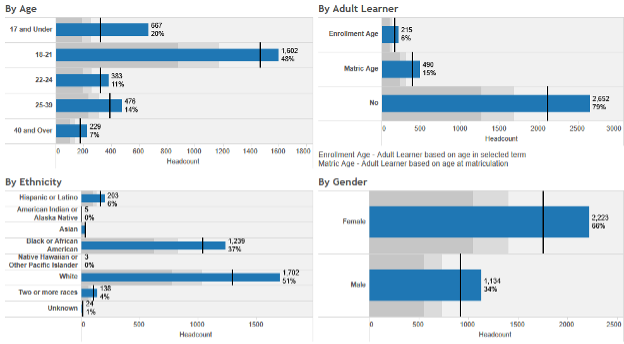

Figure 1. Percentage and total number of students by demographic category and student type.
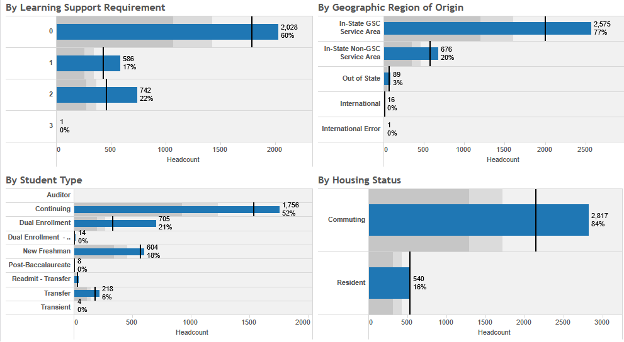
Figure 2. Students by learning support requirement, student type, region of origin, and housing status.
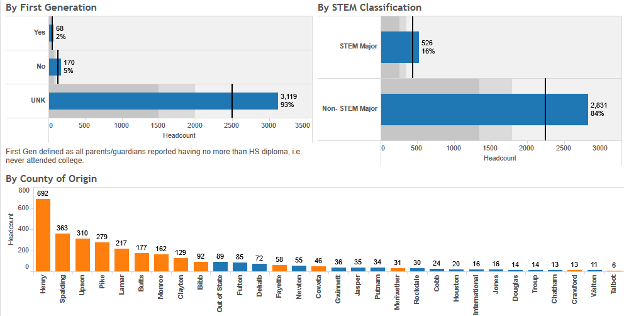
Figure 3. Student identification by first-generation status, STEM/non-STEM designation, and country of origin.
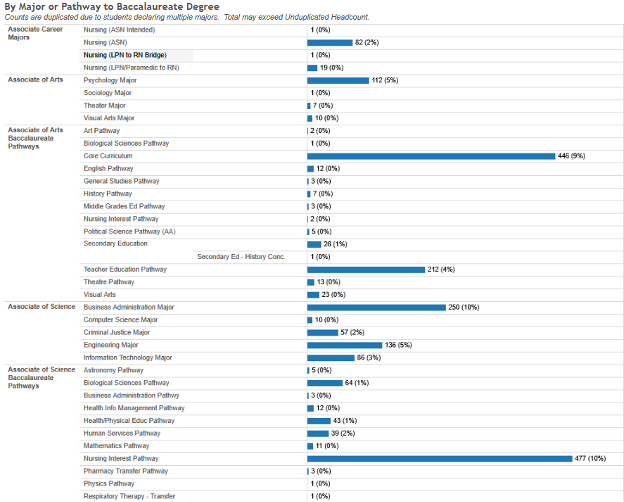
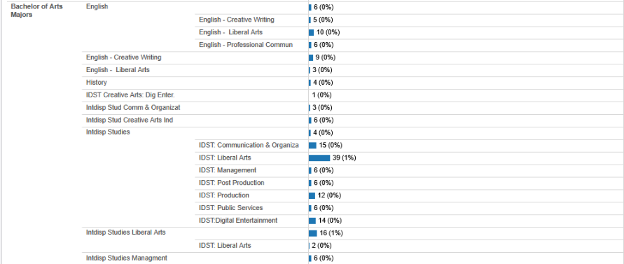
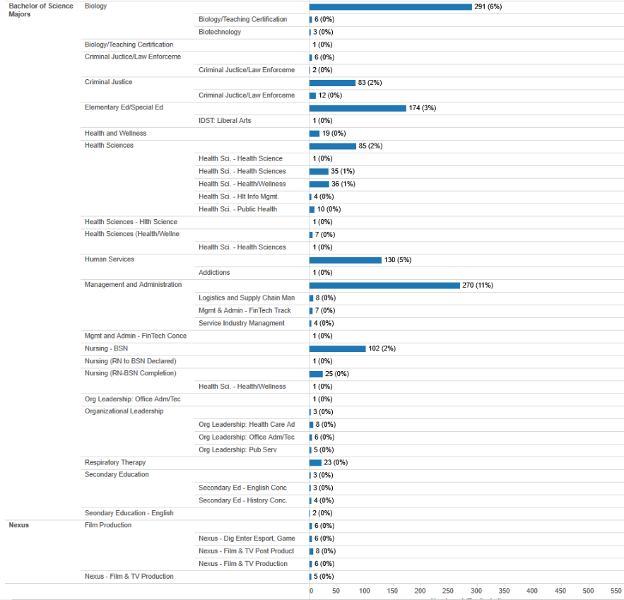
Figure 4. Student distribution by degree type and academic major.
Observations, Next Steps, and Reflecting on Momentum Work
1.1 Overall experience with respect to student success over the past year
Over the past year, Gordon State College has continued to advance its student success agenda by refining and expanding several key initiatives. These efforts reflect a sustained institutional commitment to fostering academic progress, improving retention, and strengthening the systems that support student learning and engagement.
Attendance Tracking Initiative - The College has maintained comprehensive attendance tracking across all 1000- and 2000-level core courses, supported by increased faculty participation and consistent reporting practices. Automated Navigate notifications continue to alert students who miss more than four class periods, prompting timely intervention from instructional and advising staff. This expanded infrastructure allows for earlier identification of disengagement and increases the likelihood of successful re-engagement.
Enhanced Academic Advising - Professional advising remains extended to the first 60 credit hours, ensuring that students receive structured guidance throughout the foundational stages of their academic careers. The advising team consists of six professional advisors—two assigned to each school—and a dual-enrollment advisor newly transitioned from Admissions. While this model continues to provide targeted support, current advising loads have risen to levels that are no longer optimal. Plans are underway to hire two additional advisors to restore balanced caseloads and maintain high-quality advising services.
Living Learning Communities (LLCs) - The College’s Living Learning Communities for nursing, education, first-generation students, and business majors continue to support student belonging and academic integration. Oversight of these communities has transitioned from Student Affairs to Academic Affairs, with deans and department heads assuming leadership of programming and coordination. The institution is actively exploring the appointment of a dedicated staff member to provide unified management across all communities.
Tutoring and Academic Support Services - Gordon State College’s tutoring program has matured following a period of rapid expansion. Approximately fifteen tutors now provide support across all core subjects and selected upper-level courses. The implementation of a formal referral system allows faculty and staff to initiate Navigate cases for students in need of academic assistance, enabling tutors to conduct structured outreach and document their work through appointment summaries. This system strengthens communication among tutors, advisors, and faculty, contributing to a more coherent network of academic support. Additional campus units, including the library and Housing and Residence Life, are preparing to enhance their use of Navigate, with Housing slated for expanded integration by Spring 2026.
Student Communication and Outreach Campaigns - Communication with students has become increasingly targeted and strategic. Continuing-student messaging campaigns, onboarding communications for new students, and expanded enrollment campaigns have been refined to promote timely registration, persistence, and engagement with four-year pathways. The timeline for enrollment campaigns has been deliberately advanced to align with advising appointment campaigns and encourage proactive registration behavior. In response to recommendations from NISS, the College has initiated a review of message volume and frequency to ensure balanced communication that supports rather than overwhelms students. We have also discontinued our Math Learning Support Outreach campaign, as it may not have achieved measurable success to warrant its continuation. We have expanded and streamlined our Academic Probation Messaging Campaign to provide students on probation with additional information that can help them succeed.
1.2 status and progress of your student success work this year
At the beginning of this period, our outlook on student success was cautiously optimistic. We were emerging from the disruptions of the pandemic and earlier budget reductions, and although progress had begun, much of our support infrastructure still required rebuilding. Over the past year, however, our perspective has shifted toward measured confidence, supported by clear evidence of improvement. Our Fall-to-Fall retention rate now stands at 64.5%, an increase of more than eleven percentage points over last year and the highest rate since Gordon State College became a four-year degree–granting institution. At the same time, we remain realistic: while last year’s Fall 2024 to Spring 2025 retention reached 88%, preliminary indicators this year are mixed—midterm F grades are down, but progress report data suggests we may trail last year slightly.
Several initiatives illustrate why we remain cautiously optimistic. Attendance tracking, now covering all 1000- and 2000-level core courses, continues to generate valuable early alerts and has benefitted from increased faculty buy-in, though new adjuncts and a few resistant faculty members require continued onboarding. Our advising model—expanded to 60 credit hours—remains a major strength, but current caseloads are not sustainable; the planned addition of an advisor in Fall 2026 should provide relief.
Living Learning Communities for nursing, education, first-generation students, and business majors continue to function well under Academic Affairs, though the success of this model depends on identifying a dedicated coordinator. Similarly, our tutoring program has stabilized at around 15 tutors and now includes a referral system tied to Navigate, enabling structured outreach and documented support for students. Continued gains will require standardized training and improved efficiency.
Navigate360 adoption continues to expand, including planned integration with Housing and Residence Life in Spring 2026, but wider ownership and more consistent training are needed. Much of the system’s management still relies heavily on one leader, despite strong IT assistance.
Overall, the substantial rise in Fall-to-Fall retention, coupled with progress across attendance monitoring, advising, LLCs, tutoring, and Navigate, supports an outlook of cautious optimism. While we still face capacity and consistency challenges, the institution is clearly moving in a positive direction and is well positioned to sustain improvement and advance toward long-term student success goals.
1.3 Evaluation
This year brought substantial progress in early intervention and cross-unit coordination. Attendance tracking across all 1000- and 2000-level core courses, especially high-DFW in-person math classes, generated timely alerts that allowed for earlier outreach. In FIRE 1000, ABC rates improved over 2024, suggesting that consistent monitoring and early alerts are beginning to have an impact. The tutoring referral system supported stronger follow-up, and although full analysis will occur in December, appointment tracking and case documentation indicate increasing structure and accountability. The Living Learning Communities continued to foster belonging, and the first Summer Bridge program strengthened early engagement, with participation expected to grow to 70 students in Summer 2026.
Interdepartmental collaboration remained a strong point. The Center for Workforce Development enhanced coordination between Advising and Career Services, and Advising, Financial Aid, and Admissions worked closely to support SAP W students. Expanded communication campaigns, including earlier enrollment nudges and program messaging, increased consistency of student outreach. Navigate360 usage broadened as the library began experimenting with the platform and Housing prepared to implement it in Spring 2026.
Challenges persisted, however. Advising caseloads became unsustainably high, limiting the team’s ability to follow up on early alerts, mentoring, and FIRE-related concerns. An additional advisor is planned for Fall 2026, but the current load remains a constraint. Faculty mentoring and early alert participation were uneven, with many faculty reporting feeling overextended. New adjuncts also required more onboarding for attendance tracking and Navigate, leading to inconsistent reporting. The success of LLCs was similarly limited by the lack of a dedicated coordinator. Navigate360 ownership remains overly centralized, with one leader managing most training and maintenance despite IT support.
Overall, the year demonstrated significant progress—reflected most clearly in the record Fall-to-Fall retention rate of 64.5%, an increase of more than eleven percentage points over last year—but also highlighted areas where capacity, structure, and faculty engagement must improve. Strengthening these elements will be essential to sustaining the positive momentum established this year.
1.4 Analysis
Gordon State College’s progress this year is largely the result of a strong institutional culture, the hard work of committed faculty and staff, and the effective use of technology. Systems like Navigate360 and Element451 served as powerful force multipliers, allowing teams to communicate with students more consistently, coordinate early alerts, track attendance patterns, and streamline outreach in ways that meaningfully supported retention. These tools amplified the impact of our people, enabling small teams to function with greater precision, efficiency, and alignment. Combined with the determination of advisors, instructors, tutors, and student support personnel—and reinforced by leadership that has prioritized collaboration and data-informed practices—these factors created the conditions for our notable gains, including the institution’s substantial improvement in Fall-to-Fall retention and strengthened belonging through LLCs and the Summer Bridge program.
At the same time, several challenges this year stemmed from insufficient staffing and stretched resources. Advising caseloads remain too high to sustain the level of proactive outreach and follow-up that our early alert systems require. Key programs, such as the Faculty Mentor Program and Living Learning Communities, need dedicated personnel to support consistent execution and coordination. Additionally, while technology has been a major asset, Navigate360 management is too centralized, limiting our ability to scale training and expand usage across new units. These resource constraints have made it difficult to maintain consistency across initiatives and underscore the need for additional staffing and structural support to fully realize the potential of our student success efforts.
1.5 Conclusions & Key Takeaways
The past year underscored that collaboration, culture, and coordinated use of technology are central to our progress. We learned that when faculty and staff work together—supported by strong leadership, clearer communication structures, and tools like Navigate360 and Element451 acting as force multipliers—we are able to intervene earlier, support students more consistently, and make meaningful gains in retention and belonging. At the same time, we saw that our momentum is limited when staffing and structural capacity cannot keep pace with the scale of our initiatives; advising caseloads, coordination gaps in mentoring and LLCs, and centralized Navigate oversight all highlighted the need for additional personnel, clearer processes, and sustained training. Moving forward, success will require strengthening these foundational supports, continuing to reduce silos, and deepening cross-departmental coordination. The Momentum strategies we are pursuing—focused on engagement, early intervention, clear pathways, and student belonging—are well aligned with our institutional priorities, and with the right staffing and infrastructure in place, they will continue to guide our progress effectively.
1.6 Action Plan for 2026
1. Strengthen Early Alert, Attendance, and Intervention Systems
- Improve intervention effectiveness by focusing on how we act on the attendance and early alert data already collected.
- Strengthen interventions by following through on Success Plans for all students on academic probation or returning from suspension; all Success Plans must be completed within two weeks of the semester’s start.
- Increase efficiency and responsiveness in the tutoring program, ensuring referrals consistently result in timely, meaningful support.
- Refine follow-up expectations across units to ensure clear, timely, documented interventions.
2. Expand and Support the Faculty Mentor Program
- Improve mentor buy-in through communication about the program’s value and demonstrated impact.
- Create and distribute a one-page program description outlining workflow, assignments, expectations, and key processes—distributed to faculty and academic assistants.
- Build a centralized collection of mentoring templates and resources, and consider creating a webpage to house all materials.
- Provide short, focused training touchpoints for mentors during critical points in the semester.
- Establish simple recognition practices to acknowledge consistent faculty participation.
3. Improve Advising Capacity, Training, and Integration
- Reduce caseload pressure by preparing to hire an additional professional advisor for Fall 2026.
- Implement an annual NACADA-informed training cycle, with flexibility to add more sessions if needed.
- Form an Advising Advisory Council (per NISS recommendation) to review policies, provide feedback, and help improve advising practices.
- Strengthen collaboration with FIRE mentors, instructors, tutors, and advisors, ensuring FIRE mentors are fully integrated into the student success network.
4. Enhance Navigate360 & Element451 as Technology Force Multipliers
- Use Navigate360 data more intentionally to prioritize cases, monitor engagement patterns, and guide interventions.
- Build a distributed Navigate support and training team to reduce over-centralization and ensure broader campus expertise.
- Clarify system roles: Navigate360 for continuing student communication, alerts, and case management; Element451 for recruiting and external communication.
5. Build a Coordinated First-Year Success Ecosystem
- Create a First-Year Success Advisory Council to coordinate all first-year initiatives (NISS recommendation).
- Integrate FIRE 1000, advising, Summer Bridge, Residence Life, tutoring, FIRE mentors, and early alerts into a unified first-year framework.
- Ensure FIRE mentors work collaboratively with FIRE instructors, advisors, and tutors to create a coordinated support network for new students.
6. Strengthen Living Learning Communities (LLCs) and Summer Bridge
- Conduct a data-informed review of existing LLCs to determine which should be maintained, adjusted, or expanded.
- Evaluate the efficiency of embedded tutoring in LLCs and determine whether adjustments or alternative models are needed.
- Scale Summer Bridge to ~70 students in Summer 2026, with strengthened academic and social integration.
7. Strengthen Tutoring and Academic Support
- Complete the December analysis of tutoring utilization vs. DFW rates to assess program impact.
- Improve training consistency and process discipline across tutors while maintaining the current team size (~15).
- Reinforce timely case management: outreach within 2–3 days and closure within two weeks.
- Ensure tutoring time and funds are used efficiently and effectively, with adjustments made based on data and student needs.
8. Integrate Career Services Throughout Student Success Efforts
- Embed Career Services more intentionally into first-year programming, advising conversations, LLC activities, and interventions.
- Reinforce the message that students are at Gordon State College to earn a degree and prepare for the workforce, aligning academic planning with career goals.
Priority Focus for 2025–2026
- Increased data-informed interventions and consistent use of Success Plans.
- A coordinated, campus-wide first-year success ecosystem with an advisory council.
- Strengthened faculty mentor engagement and clear program communication.
- Addressing advising capacity constraints and improving advising practices through a new council.
- Expanded, distributed expertise for Navigate360 across units.
- Clearer integration of Career Services in academic and co-curricular success efforts.
- Ensuring LLCs, Summer Bridge, FIRE, and tutoring align to create belonging and academic momentum.
1.7 Goal Review Reflecting on your top-level goals
Refine First-Year Success Goals
- Create a coordinated First-Year Success Ecosystem (advising, FIRE, Summer Bridge, Residence Life, tutoring) with an advisory council to improve alignment and execution.
Strengthen Advising Capacity & Quality
- Adjust goals to address unsustainable advising caseloads, incorporate NACADA-informed annual training, and establish an Advising Advisory Council per NISS guidance.
Improve Intervention Effectiveness
- Shift focus from increasing early alert participation (already at 95%+) to strengthening the quality, timeliness, and consistency of interventions, including mandatory Success Plans.
Enhance Faculty Mentor Engagement
- Rework mentoring goals to emphasize faculty buy-in, clear expectations, a shared one-page program guide, and improved coordination across mentors, advisors, tutors, and instructors.
Expand Distributed Technology Leadership
- Adjust goals to prioritize multi-person Navigate leadership, better campuswide use of data, and improved integration between Navigate (continuing students) and Element451 (recruitment).
Reevaluate LLC Strategy
- Revise goals to include a data-based review of current LLCs before expansion and assess the efficiency of LLC-embedded tutoring.